Many of us reach for a dishwasher tablet, expecting a powerful clean for our dishes. The vibrant blue swirls or layers often seem to promise extra cleaning efficacy, a visual cue of potent ingredients at work. But have you ever considered what purpose that blue dye truly serves, and more importantly, what impact it might have on your plastic dishes or even your long-term health? Far from being a cleaning necessity, the blue dye in many dishwasher tablets can be a silent culprit, potentially leading to unsightly stains on your plasticware and introducing unnecessary chemicals into your home environment.
The Allure of Blue: More Cosmetic Than Clean
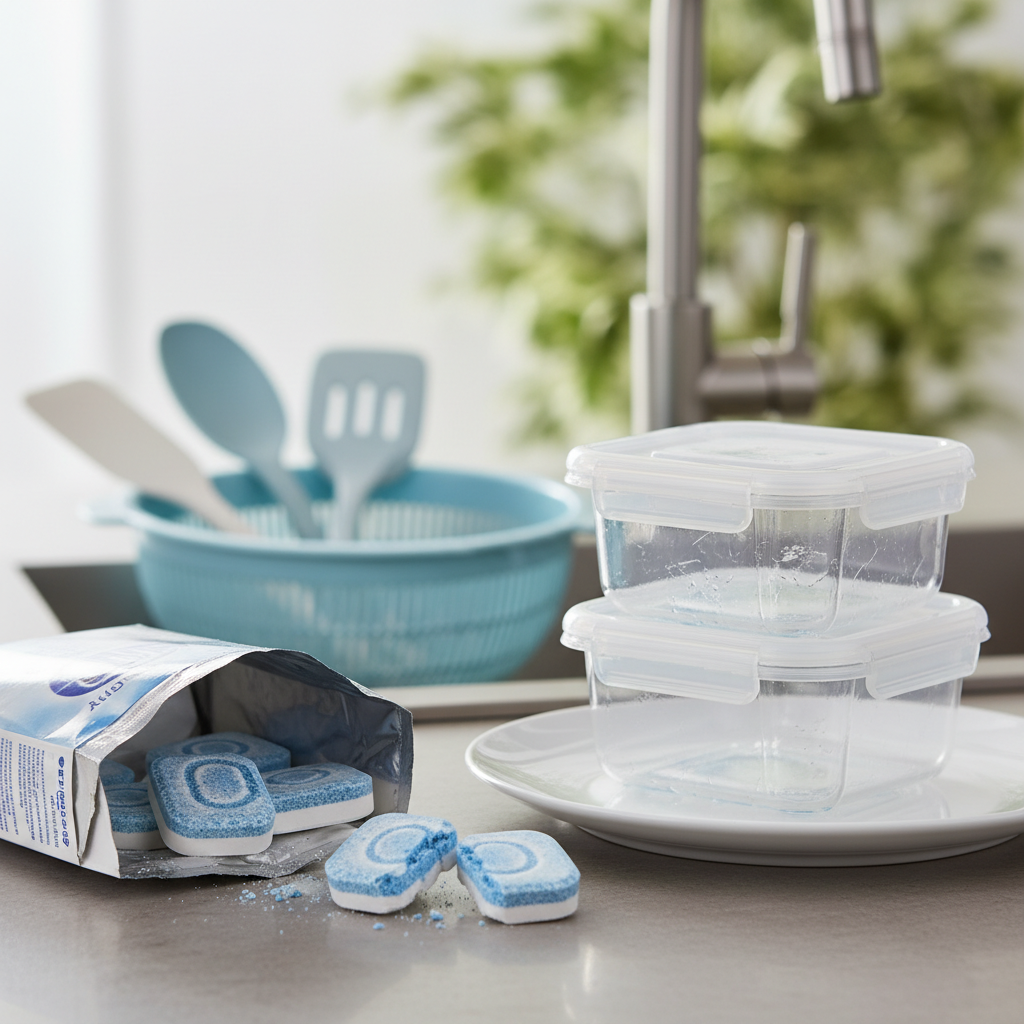
Dishwasher detergent manufacturers often incorporate colorful dyes, particularly blue, into their tablets and pods. This choice is primarily aesthetic, designed to catch your eye on the supermarket shelf and visually communicate cleanliness or specific cleaning actions (like a “powerball” effect). In reality, these dyes add no functional value to the cleaning process itself. The powerful enzymes, surfactants, and other cleaning agents are perfectly capable of tackling grease and grime without the need for any artificial coloring.
The primary blue dye used in many cleaning products, including dishwasher detergents, is often Brilliant Blue FCF, also known as FD&C Blue No. 1 or Acid Blue 9. This is a synthetic organic compound, frequently derived from petroleum, whose sole purpose in your dishwasher tablet is to make it look appealing.
How Blue Dye Can Stain and Affect Your Plastics
The vibrant blue that makes dishwasher tablets so attractive can, paradoxically, be the cause of unwelcome blue stains or discoloration on your plastic dishes. Plastics, by their very nature, are often porous materials. When subjected to the high temperatures inside a dishwasher, these plastics can expand ever so slightly, opening up their microscopic pores.
During the wash cycle, as the dishwasher tablet dissolves, the blue dye is released into the hot water along with the cleaning agents. If the dye, or remnants of the dye-carrying components, do not fully rinse away, these particles can seep into the expanded pores of your plastic items. As the dishwasher cools and the plastics contract, these dye particles can become trapped within the material, resulting in persistent blue stains that are incredibly difficult, if not impossible, to remove through further washing.
Homeowners frequently report finding faint blue residues or distinct blue specks on their plastic containers, baby bottles, and even the internal plastic components of their dishwashers, such as filters or racks. This visual evidence suggests that the dyes are indeed interacting with and adhering to plastic surfaces, indicating a chemical exchange that goes beyond simple surface-level cleaning.
Beyond Stains: Potential Health and Environmental Considerations
The problem with artificial dyes extends beyond mere aesthetics and staining. Introducing unnecessary chemicals, like petroleum-derived dyes, into your dishwashing routine carries potential implications for both your family’s health and the environment.
Artificial dyes, including Brilliant Blue FCF, are often composed of various chemical compounds, some of which may contain heavy metals. When these dyes leave trace residues on your dishes, you risk inadvertently ingesting small amounts of these substances over time. While regulatory bodies often deem certain levels safe for ingestion (as Blue No. 1 is also a food additive), minimizing exposure to non-essential chemicals is generally advisable, especially for those with sensitivities or allergies. Some research suggests that various artificial dyes, in general, can be problematic, potentially contributing to allergic reactions or other sensitivities in susceptible individuals.
Environmentally, these synthetic dyes wash down your drain and enter wastewater systems. Although some treatment processes can remove certain chemicals, the complete breakdown of all synthetic dyes can be challenging. This means they can potentially leach into natural water bodies, contributing to water pollution and possibly impacting aquatic ecosystems. Choosing dye-free products is one step towards reducing this chemical load on our environment.
Embracing a Safer Clean: The Benefits of Dye-Free Dishwasher Tablets
If you’re concerned about blue stains on your plastics or the presence of unnecessary chemicals, switching to dye-free dishwasher tablets is a straightforward solution. Many reputable brands offer effective cleaning formulations that intentionally omit artificial colors and fragrances.
The benefits of going dye-free include:
- No Risk of Staining: Without artificial colors, there’s no dye to leach into your plasticware, ensuring your containers remain clear and unstained.
- Reduced Chemical Exposure: Eliminating dyes removes a layer of potentially problematic chemicals from your dishwashing cycle and, consequently, from your dishes.
- Kinder to Sensitivities: Dye-free options are often formulated with fewer irritants, making them a better choice for households with sensitive skin or allergies.
- Environmental Friendliness: Many dye-free tablets align with broader eco-friendly initiatives, often featuring plant-based ingredients and biodegradable formulations that are better for waterways.
Tips for Protecting Your Plastics and Your Health
To ensure your plastics remain clean, clear, and free from unwanted chemical interactions, consider these practical tips:
- Opt for Dye-Free Detergents: Make a conscious choice to select dishwasher tablets or powders that explicitly state “dye-free” and “fragrance-free” on their packaging.
- Read Ingredient Labels: Familiarize yourself with common dye names like Brilliant Blue FCF, FD&C Blue No. 1, or Acid Blue 9, and avoid products listing them.
- Pre-Scrape Dishes: While pre-rinsing isn’t always recommended for modern dishwashers (as food particles can help activate certain enzymes), scraping off heavy food residues can reduce the overall “mess” in your machine, promoting better dissolution and rinsing of detergents.
- Proper Loading: Ensure dishes are loaded correctly, not overcrowded, allowing water and detergent to circulate freely and rinse thoroughly.
- Maintain Your Dishwasher: Regularly clean your dishwasher’s filter and interior. Mineral buildup or undissolved detergent residue can exacerbate staining issues and reduce cleaning efficiency. Running an empty cycle with vinegar can help maintain a clean machine.
Conclusion
The presence of blue dye in dishwasher tablets is a purely aesthetic choice that offers no real cleaning advantage. While visually appealing, this synthetic coloring can lead to stubborn blue stains on your beloved plastic dishes and introduces unnecessary chemicals into your home and the environment. By understanding these potential drawbacks, consumers can make more informed decisions, choosing dye-free and fragrance-free options that prioritize both pristine plasticware and a healthier, more sustainable household. Isn’t it time we looked beyond the color and focused on what truly matters: a genuinely clean and safe wash?
Frequently Asked Questions
Do blue dyes in dishwasher tablets affect all plastics equally?
|
Our Picks for the Best Dishwasher tablets in 2026
As an Amazon Associate I earn from qualifying purchases.
|
||
| Num | Product | Action |
|---|---|---|
| 1 | BLUELAND 100% Plastic-Free Dishwasher Detergent Tablets, 60 Count, Free & Clear, Eco-Friendly Dishwashing Pods, Natural, USDA Certified biobased |

|
| 2 | Cascade Complete Dishwasher Detergent Pods Fresh Scent Value Pack, Powerful Dishwasher Pods for Sparkling Clean Dishes, Grease-Fighting Dishwashing Detergent Tablets, 100 Count |
|
| 3 | BLUELAND 100% Plastic-Free Dishwasher Detergent Tablets, Starter Set, 60 Count with tin, Free & Clear, Eco-Friendly Dishwashing Pods, Natural, USDA Certified biobased |
|
| 4 | Cascade Platinum Plus Dishwasher Pods, Dish Detergent Soap, Clean Scent, 62 Count |
|
| 5 | Finish Classic Dishwasher Pods, No Pre-Rinse Dishwasher Detergent Soap For Clean & Shine everyday with grease fighting Power, 84 count |
|
| 6 | Finish - All in 1 - Dishwasher Detergent - Powerball - Dishwashing Tablets - Dish Tabs - Fresh Scent, 94 Count (Pack of 1) - Packaging May Vary |
|
| 7 | Finish Quantum Dishwasher Pods, No Pre-Rinse Dishwasher Detergent Soap Removes 24HR Dried-On Stain and Grease, Leaving a Virtually Spotless Shine, 82 Count |
|
| 8 | BLUELAND 100% Plastic-Free Dishwasher Detergent Tablets, 120 Count, Free & Clear, Eco-Friendly Dishwashing Pods, Natural, USDA Certified biobased |
|
| 9 | Finish Quantum Dishwasher Pods, No Pre-Rinse Dishwasher Detergent Soap Removes 24HR Dried-On Stain and Grease, Leaving a Virtually Spotless Shine, 100 Count |
|
| 10 | Cascade Complete Dishwasher Pods - Fresh Scent ActionPacs, Dishwasher Detergent, Dishwasher Soap, Detergent Pods, 78 Count |
|
The porosity and type of plastic can influence how readily it absorbs dyes. Softer, more porous plastics may be more susceptible to staining than harder, less permeable varieties. However, over time and with repeated exposure to hot water, most plastics can show some degree of discoloration or residue buildup from dyes.
How can I remove blue stains from my plastic dishes?
Removing blue dye stains from plastics can be challenging as the dye often seeps into the material’s pores. Try soaking the stained items in a mixture of baking soda and warm water, or a diluted bleach solution (if safe for the plastic). Exposure to direct sunlight for several hours or days can sometimes help fade stubborn stains, a process known as photodegradation.
Are there other harmful ingredients in dishwasher tablets besides dyes?
Yes, conventional dishwasher tablets often contain other ingredients that can be concerning, such as synthetic fragrances (which can be a cocktail of undisclosed chemicals, including phthalates), phosphates (environmental pollutant), and chlorine bleach (corrosive and can produce harsh fumes). Choosing products free from these additives offers a safer cleaning experience.
Are “eco-friendly” dishwasher tablets truly dye-free?
Many eco-friendly or non-toxic dishwasher tablet brands specifically market themselves as dye-free and fragrance-free, relying on plant-based and mineral-derived ingredients for their cleaning power. Always check the ingredient list and look for certifications (like EPA Safer Choice or USDA Certified Biobased) to confirm a product’s claims about being free from artificial additives.