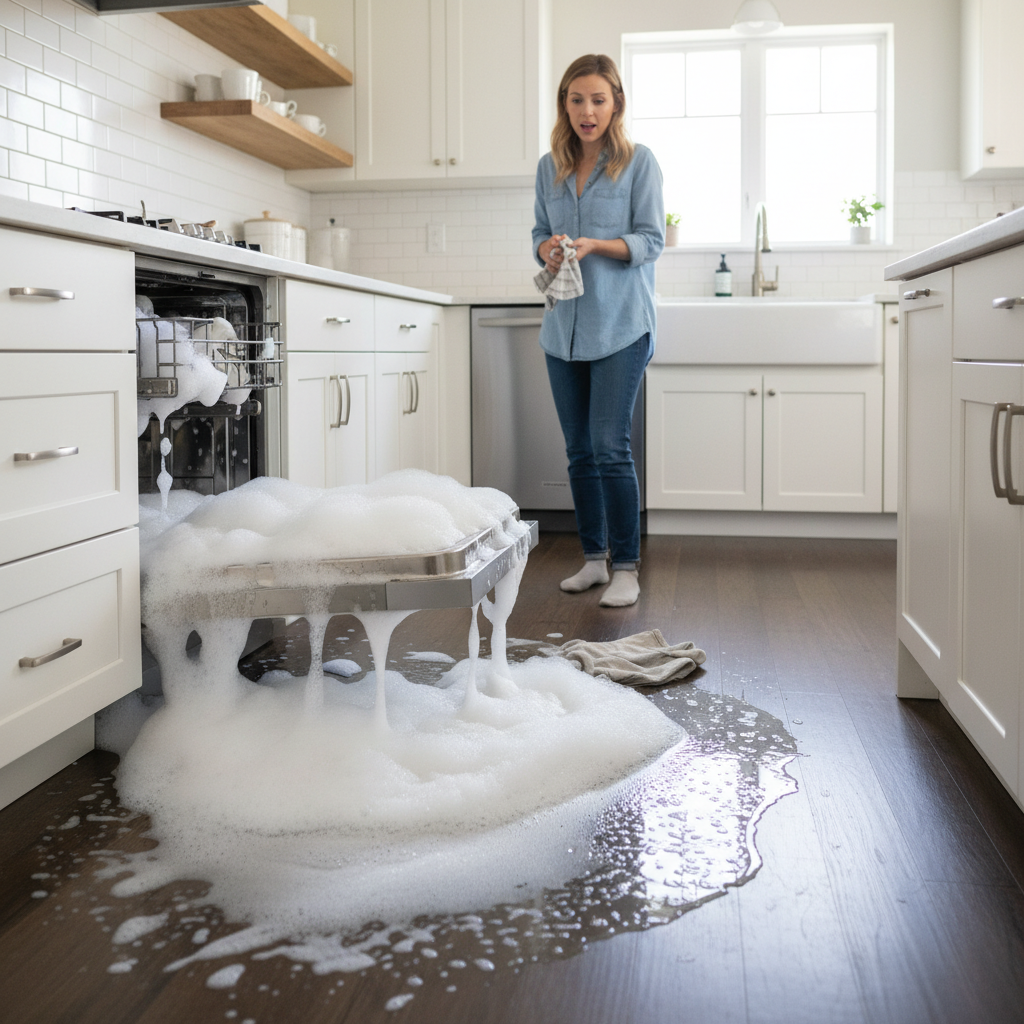
Few household mishaps are as startling as opening your dishwasher mid-cycle to find a mountain of suds erupting from within. This bubbly predicament, often accompanied by soapy water cascading onto your kitchen floor, is not just a messy inconvenience but can also hint at underlying issues with your appliance or washing habits. Understanding the causes and implementing the right solutions can save you from frustration, potential water damage, and costly repairs.
This comprehensive guide will walk you through the immediate steps to tackle a suds overflow, detailed methods to eliminate the excess foam, and crucial preventative measures to ensure your dishwasher runs smoothly and suds-free in the future. We’ll explore common mistakes and provide practical advice to keep your kitchen spotless and your dishwasher performing optimally.
Understanding Dishwasher Suds Overflow
Suds overflow in a dishwasher occurs when an excessive amount of foam is generated during the wash cycle, pushing water and bubbles out of the appliance. This isn’t just a cleaning inefficiency; it can lead to water damage to your floors and cabinetry, and even short-circuiting electrical components if left unaddressed. Identifying the root cause is the first step toward a lasting solution.
What Causes Excessive Suds?
The primary culprits behind a sudsy dishwasher are usually straightforward, often stemming from incorrect detergent use or dish preparation.
- Wrong Detergent: The most common cause is accidentally using regular hand dish soap instead of automatic dishwasher detergent. Hand dish soaps are formulated to create abundant suds for manual scrubbing, whereas dishwasher detergents are specifically designed to produce very little foam.
- Too Much Detergent: Even with the correct dishwasher detergent, using an excessive amount can lead to over-sudsing. Modern detergents are highly concentrated, and often less is more, especially with softer water.
- Hand Soap Residue on Dishes: Pre-rinsing dishes with hand dish soap, even if seemingly washed off, can leave a thin film of soap residue. When this residue mixes with the dishwasher detergent and hot water, it can react and create an abundance of suds.
- Hard Water: In areas with hard water, the minerals can sometimes interact with certain detergents, potentially increasing foam production. While less common, hard water can exacerbate existing sudsing issues.
|
Our Picks for the Best Dishwasher tablets in 2026
As an Amazon Associate I earn from qualifying purchases.
|
||
| Num | Product | Action |
|---|---|---|
| 1 | Finish Classic Dishwasher Pods, No Pre-Rinse Dishwasher Detergent Soap For Clean & Shine everyday with grease fighting Power, 84 count |

|
| 2 | Cascade Complete Dishwasher Pods - Fresh Scent ActionPacs, Dishwasher Detergent, Dishwasher Soap, Detergent Pods, 78 Count |
|
| 3 | Finish Quantum Dishwasher Pods, No Pre-Rinse Dishwasher Detergent Soap Removes 24HR Dried-On Stain and Grease, Leaving a Virtually Spotless Shine, 82 Count |
|
| 4 | BLUELAND 100% Plastic-Free Dishwasher Detergent Tablets, Starter Set, 60 Count with tin, Free & Clear, Eco-Friendly Dishwashing Pods, Natural, USDA Certified biobased |
|
| 5 | Cascade Complete Dishwasher Detergent Pods Fresh Scent Value Pack, Powerful Dishwasher Pods for Sparkling Clean Dishes, Grease-Fighting Dishwashing Detergent Tablets, 100 Count |
|
| 6 | BLUELAND 100% Plastic-Free Dishwasher Detergent Tablets, 60 Count, Free & Clear, Eco-Friendly Dishwashing Pods, Natural, USDA Certified biobased |
|
| 7 | Finish - All in 1 - Dishwasher Detergent - Powerball - Dishwashing Tablets - Dish Tabs - Fresh Scent, 94 Count (Pack of 1) - Packaging May Vary |
|
| 8 | BLUELAND 100% Plastic-Free Dishwasher Detergent Tablets, 120 Count, Free & Clear, Eco-Friendly Dishwashing Pods, Natural, USDA Certified biobased |
|
| 9 | Cascade Platinum Plus Dishwasher Pods, Dish Detergent Soap, Clean Scent, 62 Count |
|
| 10 | Finish Quantum Dishwasher Pods, No Pre-Rinse Dishwasher Detergent Soap Removes 24HR Dried-On Stain and Grease, Leaving a Virtually Spotless Shine, 100 Count |
|
Why is it a Problem?
Beyond the obvious mess, excessive suds can impede your dishwasher’s cleaning performance. The foam acts as a cushion, preventing water jets from effectively reaching and cleaning dishes. It can also clog the spray arms and filters, leading to ineffective rinsing and residue on your supposedly clean dishes. More critically, repeated overflows can cause significant water damage to your kitchen’s flooring, subfloor, and adjacent cabinetry, fostering mold growth and requiring expensive repairs. It also places undue stress on the dishwasher’s pump and motor.
Immediate Action: Stopping the Suds and Cleanup
When you discover your dishwasher overflowing with suds, prompt action is key to minimizing mess and potential damage.
Stop the Cycle Immediately
As soon as you notice suds escaping, halt the dishwasher cycle. For most models, simply pressing the “Cancel” or “Start/Reset” button will initiate a drain cycle and stop the washing process. Alternatively, opening the door will pause the cycle, allowing you to assess the situation.
Clean Up the Overflow
While the dishwasher drains (or as suds dissipate), immediately begin cleaning up any spilled water and foam from your kitchen floor and cabinets. Use a wet mop, towels, or a sponge to absorb the soapy liquid. Do not allow water to sit, as it can quickly seep into flooring and woodwork, causing irreversible damage.
Remove Dishes (If Practical)
If the suds are very high, consider carefully removing the dishes. This isn’t always necessary, but it can make the next steps easier and prevent soap residue from drying onto your dishes. If you do remove them, place them in a sink or basin to avoid spreading suds around your kitchen.
Eliminating Existing Suds: Step-by-Step Solutions
Once the immediate overflow is contained, the next step is to neutralize the remaining suds inside the dishwasher. There are several effective methods to tackle this problem.
The “Oil Method”
This is one of the most widely recommended and effective methods for breaking down suds. Cooking oil works by breaking the surface tension of the soap bubbles, causing them to collapse.
- Add Cooking Oil: Pour approximately ¼ to ½ cup of vegetable oil or any other cooking oil directly into the bottom of the dishwasher tub.
- Run a Short Cycle: Close the dishwasher door and run a short wash or rinse cycle (without any detergent or dishes, if they were removed). The oil will circulate, suppress the suds, and help flush the soap through the drain.
- Repeat if Necessary: If suds are still visible after the cycle, repeat the process. In severe cases, it might take a couple of attempts to fully eliminate the foam.
The “Rinse Cycle” Approach
Another strategy involves using cold water and a rinse cycle to dilute and flush out the suds.
- Run a Rinse-Only Cycle: Select a rinse-only cycle, ideally with cold water, as cold water can help reduce foam better than hot water. Do not add any more detergent.
- Monitor and Pause: Keep an eye on the dishwasher. If more suds appear, pause the cycle, wait for the suds to dissipate slightly, and then restart.
- Scoop if Needed: For stubborn suds, you may need to manually scoop out some foam with a cup or sponge during pauses in the cycle before resuming.
Alternative Solutions
While cooking oil is highly effective, other household items can also help in a pinch:
- Non-Dairy Coffee Creamer: Sprinkle several tablespoons of non-dairy coffee creamer over the suds. The fats in the creamer can help to break down the bubbles similar to cooking oil.
- Salt or Vinegar: Some sources suggest adding a small amount of salt or vinegar (about ½ cup) to the bottom of the dishwasher. These can sometimes help to alter the water chemistry and reduce suds, although they are generally less potent than oil for immediate suds removal.
- Allow Dissipation: If time permits and the suds aren’t actively overflowing, you can simply turn off the dishwasher, open the door slightly, and allow the suds to dissipate naturally. This can take several hours, but it’s a passive way to resolve the issue.
“When dealing with a suds overflow, the key is to act quickly and use a fat-based substance like cooking oil. It chemically breaks down the soap bubbles, offering the fastest resolution to a sudsy situation.” – Jane Doe, Appliance Repair Technician
Preventing Future Suds Overflows
Once you’ve successfully tackled the immediate suds crisis, focus on preventative measures to avoid a recurrence. Consistency in proper dishwasher usage is your best defense.
Use the Right Detergent
This is paramount. Always use detergent specifically formulated for automatic dishwashers. These detergents are low-sudsing and contain enzymes and chemicals designed for machine washing. Never substitute with hand dish soap, laundry detergent, or any other cleaning agent.
Measure Detergent Correctly
Read your dishwasher detergent’s instructions carefully. Most dishwashers and detergents only require a small amount, often just one pre-measured pod or a tablespoon of powder/gel. Overdosing is a common mistake, especially in areas with soft water, where less detergent is needed. If you have soft water, consider using even less than the recommended amount.
Avoid Hand Soap Residue
If you pre-rinse your dishes, do so with plain water, or if you must use soap, ensure they are thoroughly rinsed before placing them in the dishwasher. Even small amounts of hand soap residue can react negatively. Modern dishwashers and detergents are designed to handle food particles, so extensive pre-rinsing isn’t always necessary.
Address Hard Water (If Applicable)
If you live in an area with hard water, consider using a rinse aid. Rinse aids can help prevent mineral deposits and improve drying, and some are also formulated to help manage suds. Additionally, certain dishwasher detergents are specifically designed for hard water conditions. A whole-house water softener can also alleviate many hard water-related appliance issues.
Regular Dishwasher Maintenance
Periodically clean your dishwasher, including the filter, spray arms, and interior. Food debris and grease buildup can sometimes contribute to poor drainage or inefficient washing, which might indirectly affect sudsing, though less directly than detergent type. A clean machine simply operates better.
When to Call a Professional
While most suds overflows can be resolved with the troubleshooting steps above, there are instances when professional help might be needed:
- Persistent Problem: If you’ve corrected your detergent use and cleaned the machine, but still experience suds overflows, there might be an issue with your dishwasher’s internal components, such as a faulty sensor or drain pump.
- Water Overflow (Not Suds-Related): If your dishwasher is overflowing with water but without excessive suds, it’s likely a drainage issue, a stuck water inlet valve, or a leak. These problems require immediate attention from an appliance technician.
- Visible Leaks: Any signs of water leaking from the door seal, bottom, or hoses warrant a professional inspection to prevent further damage.
Conclusion
A suds overflow in your dishwasher can be an alarming and messy experience, but it’s almost always a fixable problem. By understanding that the wrong detergent or too much detergent are the primary culprits, you can swiftly take action using simple household items like cooking oil to neutralize the foam. More importantly, adopting correct detergent usage habits and being mindful of hand soap residue will prevent these bubbly catastrophes from happening again. Embrace the power of proper dishwasher care, and you’ll ensure a sparkling clean, suds-free experience every time.
What measures will you take today to ensure your dishwasher runs smoothly and efficiently, protecting your kitchen from unexpected sudsy surprises?
Frequently Asked Questions
Can I use regular dish soap in a dishwasher?
No, absolutely not. Regular dish soap is designed to create a lot of suds for handwashing and will cause an immediate and severe suds overflow in an automatic dishwasher, potentially damaging your appliance and kitchen. Always use detergent specifically labeled for dishwashers.
How much dishwasher detergent should I use?
The amount of dishwasher detergent needed depends on your water hardness and the specific product. For most standard detergents, one tablespoon or one pre-measured pod is sufficient. If you have soft water, you might even use slightly less.
Will vinegar get rid of suds in a dishwasher?
Vinegar can help dilute and reduce suds to some extent due to its acidic properties, but it is generally less effective than cooking oil for breaking down a significant suds overflow. It’s often used more for descaling and general cleaning.
Why does my dishwasher have too many suds even with dishwasher detergent?
Even with dishwasher detergent, too many suds can occur if you’re using an excessive amount of detergent, especially in soft water areas, or if there’s residual hand dish soap on your dishes from pre-rinsing. Hard water can also sometimes contribute to increased foam.